
Behind The Scenes of Crime and Punishment in America
11/27/2026 | 37m 54sVideo has Closed Captions
Go behind the scenes of this documentary series that explores the history of criminal justice.
Go behind the scenes of this documentary series that tells the story of criminal justice in America — from the pre-colonial era to today. Hear from the filmmaking team about how they sought to answer a deceptively simple question: “How did we get here? The series explores the architecture of justice — prisons, police, courts — and the moral and social questions beneath them.
Problems playing video? | Closed Captioning Feedback
Problems playing video? | Closed Captioning Feedback
Behind The Scenes of Crime and Punishment in America
11/27/2026 | 37m 54sVideo has Closed Captions
Go behind the scenes of this documentary series that tells the story of criminal justice in America — from the pre-colonial era to today. Hear from the filmmaking team about how they sought to answer a deceptively simple question: “How did we get here? The series explores the architecture of justice — prisons, police, courts — and the moral and social questions beneath them.
Problems playing video? | Closed Captioning Feedback
Where to Watch Behind The Scenes of Crime and Punishment in America
Behind The Scenes of Crime and Punishment in America is available to stream on pbs.org and the PBS app.
Providing Support for PBS.org
Learn Moreabout PBS online sponsorship- (tense orchestral music) [Announcer] Our justice system doesn't just impact those behind bars.
It shapes all of us.
The new eight-hour documentary series, "Crime and Punishment in America," from Emmy-winning director Lynn Novick, examines the historic roots of prisons to today's obsession with true crime, forcing us to confront a vital question.
What is the price of America's choices?
Executive produced by Ken Burns and Sam Pollard.
It's an essential documentary that charts the sweeping influence of law enforcement and the justice system on American media, economics, and politics.
- [David as Narrator] For 250 years, Americans would argue about the root cause of crime and the purpose of punishment.
(gavel banging) Laws would change.
Prosecutors, judges, and the courts would adapt.
Constables, militias, and watchmen would be replaced by armed uniformed police.
(guns blasting) Guns would proliferate, so would drugs, so would poverty, and so would bloodshed.
- [Announcer] Told through a deeply human lens, each episode is grounded in the stories of individuals, from those who have been incarcerated to victims and family members who have been deeply affected by crime.
From the frontiers of justice in colonial America and Franklin Roosevelt's War on Crime, to Jesse James and Al Capone, the series illuminates both the visible and invisible legacies of crime and punishment in modern-day American life.
- [Dwayne] One of the things that people actually are afraid to ask folks is why people commit crimes.
And I think one of the reasons why they're afraid is because people commit crimes for a whole lot of reasons.
- [Announcer] Join us as we talk with the filmmakers to learn how this groundbreaking documentary series was conceived and created as we go behind the scenes of "Crime and Punishment in America."
(uneasy dramatic music) (tense orchestral music) - It's tempting to want to find one moment, one president, one act of Congress, one motivation and say, "Well, that explains the whole thing."
But in fact, the way we got to this system was in 50 states, in 3,000 counties, a series of actors, most of them unknown to us, made small decisions in the direction of harshness.
- We're exploring age-old problems of the human condition and how has America dealt with them.
And there's no one easy narrative thread to follow through.
The driving question was, how did we get here?
And what is the purpose of punishment?
Why are we punishing people?
- [Linney as O'Hare] "Our whole system of dealing with crime is based on the assumption that punishment is a cure for crime.
If I were ruler of the universe, I would see to it that many more respectable folk went to prison for the good of their souls and the welfare of the country, especially would I see to it that no judge ever sat on a criminal bench until he had served at least one year in prison."
- This topic is so broad that at first it really was the blank page, extremely daunting, and a process of talking with our advisors, a lot of whom are historians or people who have been impacted by the system, and then you can really see stories that begin to rise to the top.
- [David as Narrator] In 1839, six years after Reed arrived there, part of the refuge burned to the ground.
(fire whooshing) (bell clanging) Reed later wrote that some of the children had set the fire.
(gentle orchestral music) (owl hoots) At 16, he was released.
- [Jackson as Reed] I was at the outside of my mother's cottage door after being absent from home for six years and seven months.
(owl hoots) Heavens, heavens.
I see the wrinkled face of my mother by the light of the pale empress of the night.
(owl hooting) Let me go and find a lone and silent place to weep.
Let darkness cover me till I approach the cottage door again with these scalding tears that's running from my eyes again.
- And the detail of the show is so powerful and important because we can only learn about something as broad a topic as crime and punishment from the individuals who are in it.
- [Wong as Appo] In conclusion of this truthful statement of my life up to the present time, I am glad to be able to say that for nearly 18 years, I have lived an honorable life.
And for several of these recent years, I have had steady employment.
A criminal can be reformed, not through fear of brutal prison discipline, but by a kind and encouraging word and a friendly act.
- In our country, one of the things that defines us and binds us together is that we believe that we are a just nation and that we have these great ideals.
And I think most Americans probably can recognize that we have not fully lived up to those ideals in any number of ways.
And when you look at the criminal justice system, you see examples of this right and left all throughout our history.
So we're also telling a story that can be painful and dark and tragic, and there also are places where we can find hope and resilience.
- [Angelica] I wasn't able to see my oldest son.
He lived with his dad, but I had the opportunity to mail in this tape, and maybe he wouldn't lose the comfort of knowing that just 'cause I'm not there doesn't mean that I don't love him.
That little thing that I did really helped.
- [Angelica In recording] "As they slept, they started dreaming of all the invisible strings they have, and from deep inside, they now could clearly see no one is ever alone."
(light thoughtful orchestral music) - [Announcer] Throughout history, Americans have been fascinated with the stories of outlaws and gangsters.
- [David as Narrator] Determined to stay out of the headlines and avoid unnecessary bloodshed, Luciano and Lansky began meeting with other gangsters from around the country.
Al Capone from Chicago, Bugsy Siegel and Frank Costello from New York, Boston's King Solomon, Boo Boo Hoff from Philadelphia.
They declared a truce and established a national crime syndicate.
- I think crime and punishment has often been portrayed in the media as entertainment.
This is kind of a way to, you know, capture eyeballs or sell books, podcasts, whatever.
So we really tried to strike a balance of being respectful to the subject matter, but also make something that is entertaining.
- [David as Narrator] Hoover and his G-men made a list of the men and women they considered the greatest threats to public safety in America.
(gentle bluegrass music) The kidnappers and bank robbers whose sensational crimes filled the headlines: Bonnie Parker and Clyde Barrow, Baby Face Nelson, Pretty Boy Floyd, and John Dillinger.
Dillinger spent nine years in prison after assaulting and robbing a family friend.
When he was paroled at 29, Dillinger formed a gang and embarked on a year-long crime spree, robbing banks from Ohio to South Dakota and breaking out of jail three times.
- We really wanted to show how the media portrays questions of crime and punishment in our history and to think about whether these stories should be consumed as entertainment.
- Jesse James is really relevant still today because it's a story of when people feel that they are being taken advantage of or getting the short end of the stick, as it were, they can really rally behind someone who is fighting that system or fighting against that system, even if they have nothing to do with those people or those interests.
- [David as Narrator] Jesse James sought publicity and fame and was eager to feed the public's fascination with crime and criminals.
He even planned some robberies with an eye to how they would be covered in the press.
- [Spencer as James] As a great deal has been said in regard to the robbery which occurred at the Kansas City Exposition Grounds, I will give a few lines to the public as I am one of the party who perpetrated the deed.
(gun blasting) It is true.
We are robbers, but we always rob in the glare of the day.
We rob the rich and give to the poor.
We are bold robbers, and I am proud of the name.
For Alexander the Great was a bold robber, and Julius Caesar and Napoleon Bonaparte.
(gun blasting) Please rank me with these.
Very respectfully, Jesse W. James.
(camera shutter clicks) - I think that story does a lot for us in terms of how people can be fascinated with crime and also how the media can give people what they want about reading about crime, but also create a legend and something that gets passed on and passed down and then turned into, as you see in the film, cartoons, comics, Hollywood movies, and Jesse James is really still relevant today.
(camera whirring) - [Announcer] The many time periods and strong emotions of "Crime and Punishment in America" is reflected in the series' original music.
- [David as Narrator] In the coming decades, prisons would continue to fill as the country was consumed by a growing sense of menace.
Threats, whether foreign or domestic, whether based in reality, prejudice, or misconception, would define and redefine what was criminal and would test the limits of justice in America.
- The music was challenging because we're covering so much history.
We're covering so many different ideas and themes.
We're trying to express many different moods and dimensions of the human experience, and we were really, really delighted and honored to get to work with Jongnic Bontemps, who's an extraordinary composer and extremely collaborative.
- Then once I understood the breadth and depth of the project, it was a no-brainer because something that's very important to me is being attached to projects that have meaning and that have a sense of civil responsibility.
- [Sanders as Black] The right to counsel may not be deemed fundamental and essential to fair trials in some countries, but it is in ours.
This noble ideal cannot be realized if the poor man charged with crime has to face his accusers without a lawyer to assist him.
Justice Hugo Black.
- [David as Narrator] Gideon's guilty verdict was overturned.
The state of Florida decided to try him again.
This time, he was given a defense attorney.
He was acquitted of all charges.
- One of the things that was really important is that we always had humanity because, at the end of the day, we're talking about people in these situations, and we can get lost in these large government forces that these huge wheels that are turning to, you know, create these industries.
But at the heart of these industries are people who are in the middle of it, who are incarcerated, and people that honestly have good intentions about how to keep our society safe or how to keep our society moving forward.
So we wanted to make sure that that human aspect was always there, and that's why we decided to really focus on orchestras, chamber groups, instruments that people actually play or, you know, that are moving air in the room to give us that soul, that connection to humanity that we wanted to make sure we never lost.
(somber string music) - [Heather] Where does it say in here that we can't have decent medical care or that we cannot practice our religion?
Where does it say that we have somehow checked our right to be free of cruel and unusual punishment?
What is so kind of fundamental at the core of these rebellions is the simple desire to be treated as human beings.
- One of my favorite pieces was really born out of the activism discussions that Lynn and I had had, and it really was about trying to encapsulate the heroism of these people like Ida B. Wells that really fought against the status quo and put themselves in danger.
So it's this heroic, hopeful, you know, rising melody that then became the main title.
- [David as Narrator] To conceal his identity, Korematsu changed his name, claimed to be of Spanish and Hawaiian origin, and even underwent plastic surgery.
But in May 1942, he was recognized while buying a pack of cigarettes at a drugstore and was arrested for violating the relocation order.
A few months later, Korematsu was found guilty in federal court.
He was given five years' probation and sent to the Topaz Internment Camp in Utah.
- And I was really proud about, you know, how well not only it fit, but how proud the team was of the music, 'cause you can always tell when a team is proud of the music because they really bring it up and make it be a central character and an important part of the film.
It's not buried, it's not obscured.
It really is front and center with the information, with the talking heads, with everything that we're trying to have the audience experience.
And that made me feel really proud that we were doing something or that I did something that was worth listening to.
- [Announcer] One of the most unique characters profiled in "Crime and Punishment in America" is the young pickpocket turned actor, turned writer, George Appo.
(ship horn blares) (bell clanging) - [Wong as Appo] As I look back on the past, I wonder how I ever lived through it all and escaped the many close calls of death from the knife, blackjacks, and pistol shots I received.
(gun blasts) The first time I received a bullet wound was in the stomach when I was about 18 years of age.
The shot was fired from a pistol in the hands of a detective down in Wall Street who, with a large crowd of excited men, were in hot pursuit after me and shouting, 'Stop, thief!'
The fact is, I had picked the pocket of a man who had a bank book full of greenbacks conspicuously sticking up from his coat pocket, and the detective must have seen me do it.
(light pensive string music) I soon got well and strong enough to leave the hospital and through necessity was compelled to take up my dishonest life once more.
George Appo.
- Early in the research process, we came across a book called "A Pickpocket's Tale," and it's a historical book built around the narrative that George Appo left behind.
And a professor named Tim Gilfoyle published the book, wrote the book, and he had discovered this memoir in a folder in a library at Columbia, and then he did an enormous amount of research to figure out who George Appo was and to triangulate his story with what was going on in New York and in the country throughout the course of his life.
- [David as Narrator] By the time he was nine, he was fending for himself on the streets of one of the roughest, poorest neighborhoods in America, New York's Five Points.
- [Timothy] He never goes to school a day in his life.
By the 1860s, there are anywhere from five to 15,000 children living on the streets of New York, sleeping in alleyways, on streets, who have been effectively abandoned or their parents have died, and there's no kind of social system; there's no safety net.
- And we were beyond delighted to have BD Wong agree to come in and be the voice of George Appo.
- I was thrilled to be acquainted with this Asian American person in history who had such a fascinating and interesting and challenging story.
You know, he's woven through the show in a way that's very clever because he represents a lot of the trials and tribulations of career criminals, and I feel like that is a huge part of what makes this show so interesting, and his story has all of the symptoms and the events and the foibles of what a lot of people go through who are in the system.
- [Wong as Appo] Around the age of nine, I started out to sell newspapers for a living, and I made the acquaintance of two boys my own age who always had plenty of money earned, as I believed, by selling papers.
(horse whinnying) But I soon found out that they were picking pockets on Broadway and used the newspapers as a cover to work their crooked business.
- When you think you're going to be voicing a character in a Ken Burns-style documentary, I might have brought to it a prejudice about how limiting that might be for me as an actor.
And I was surprised to find that producers of the show encouraged me to try to embody the voice of the character.
- BD Wong, I think just... He added so much warmth to the character.
He added so much just depth to the character just in his readings alone.
And again, I think it's the value of a great actor.
- [Wong as Appo] My unfortunate father learned from someone of my being sent there, and instead of being quiet about it, got permission from the warden to see and speak with me.
The result was 'The son of the notorious murderer, Quimbo Appo, is now at Sing Sing' got into the newspapers and made things in general very unpleasant for me.
- To me, he's the perfect encapsulation of the criminal type and also, as Dwayne Betts says, to begin the show, the question he asks us, which is "Why do people commit crimes?"
George Appo, to me, is an extremely good answer to that question.
(thoughtful orchestral music) - [Announcer] When we return, we'll explore the tragic story of a black doctor defending his Detroit home against a white mob, how live cinematography in prisons and jails gives viewers a unique experience, and how the filmmakers use the epic voice of actor Keith David to dramatic effect in "Behind the Scenes of Crime and Punishment in America."
(ominous music fading) ouncer] Welcome back to "Behind the Scenes of Crime and Punishment in America."
Coming up, we'll take a look at the tragic story of Dr.
Ossian Sweet and how filming on location helps transport viewers to a different time and place.
But first, let's meet the talented actor who lends his voice to the film's narration, Keith David.
- [David as Narrator] For the next 40 years, as the country weathered the Great Depression, the Second World War, the Cold War, and the upheaval of the 1960s, the public's anxiety about lawlessness and disorder would grow, and fear of crime would become a driving force in American life.
(tense orchestral music) Through it all, Americans would continue to grapple with how criminal laws were enforced and whom the justice system served.
- I've had the privilege of working with Keith since we worked with him first as the narrator on our "Jazz" series, so that's going back to almost 30 years, and it's just a delight to be in the studio with Keith.
He's brilliant; he's funny off camera.
Okay, this topic here wasn't so funny, but he's very funny.
He has a lightness to his way of being in the world.
He's a brilliant actor, and he's a genius when it comes to his voice.
- [David as Narrator] J.P.
Morgan Jr.
conceded that he had made stocks available at deeply discounted prices to powerful friends, including former President Calvin Coolidge and Supreme Court Justice Owen Roberts.
One reporter noted that the only difference between a bank president and a bank burglar is that one works at night.
- [Keith] You know, I've learned a lot working with Lynn and Ken over the years about the dissemination of information, you know, 'cause what I try to do is to be as objective as possible and just disseminate the information.
That doesn't mean it's totally devoid of feeling.
I'm just not imposing my feeling upon the material.
(birds squawking) (light orchestral music) - [David as Narrator] Austin Reed was born in 1823 and grew up in a community of free Black people in Rochester, New York.
His father, a successful barber, died when Reed was six.
His mother could not afford to take care of him and sent him to a wealthy family's farm as an indentured servant.
- Well, when I'm acting a part, I'm inside of it.
And actually, you know, in that moment, narrating, you're looking at it from a distance and coming into it.
- [David as Narrator] New York authorities were so pleased with Lynds' innovations at Auburn that they asked him to oversee the construction of a new prison some 30 miles up the Hudson River from New York City.
(rocks clinking) To build it, Lynds brought 100 prisoners from Auburn.
It took them three years to construct the massive fortress where they would be locked away.
Sing Sing opened in 1826.
- He's a virtuoso when it comes to what can be done with a human voice.
(soft orchestral music) It's intonation, it's authority, it's intelligence, it's timing, it's understanding the meaning and how to convey it.
It's the pacing.
It's making you care about this subject and what's being said without hitting you over the head with it, and finding that perfect balance between kind of talking at you and talking to you.
- [David as Narrator] In Washington, D.C., the home of the United States Attorney General A. Mitchell Palmer was partially destroyed.
Within a few months, Palmer created a radical division in the Justice Department.
He put an ambitious 24-year-old lawyer, John Edgar Hoover, in charge, and directed him to round up and deport thousands of non-citizens the department suspected of having radical ties.
(camera whirring) - [Announcer] Filming on location helps viewers imagine what it was like to inhabit these historical spaces.
(bright gentle music) - [Rhys as Rush] An attachment to kindred and society is one of the strongest feelings in the human heart.
A separation from them, therefore, has ever been considered as one of the severest punishments that can be inflicted upon man.
Personal liberty is so dear to all men that the loss of it for an indefinite time is a punishment so severe that death has often been preferred to it.
Benjamin Rush.
- [Vanessa] The goal of filming in these old courthouses and these old jails is to really feel like we're putting the viewer into that space itself to help them try and experience what it was like to actually be there.
We want to give people the feeling of the isolation they may have felt in that space or how frightening it might be to be in that space, how imposing.
- [Stuhlbarg as Osborne] Cell 15, second tier, North Wing, Auburn Prison.
I am a prisoner, locked, double locked, conscious of a horrible feeling of constraint, of confinement.
How in the world do they bear it?
The men who look forward to long years of imprisonment.
- We went to another jail in Wiscasset that was built in the 1800s that was all stone, granite, and that's where you really began to see, okay, these are becoming fortresses.
We need to be able to protect the people outside from the people inside.
So that was the first place where it really felt like, okay, we're putting people in cells by themselves.
There's big iron doors, what you would think of as a prison.
The other place we got to go was the Eastern State Penitentiary, which features prominently in this history and in episode one.
And that place was amazing because you really got the sense that the architecture of the place was meant to serve a purpose.
(gentle pensive orchestral music) The Eastern State Penitentiary is in Philadelphia, but when it was built, it was built on the outskirts in a cherry orchard.
We spent two full days just shooting there because even with full sunlight, you got amazing stuff.
So that was an extremely rewarding shoot.
- [David as Narrator] Each cell was lit by a skylight and a barred door leading to a tiny walled yard.
(hatch door rattling) Meals were delivered through a slot in the wall.
(hatch door slams) Only one book was permitted: the Bible.
Prisoners were permitted to pass the time making shoes or weaving baskets and were allowed into their yard for one hour a day.
They were never to see or speak to each other.
Whatever the length of their sentence, they would serve their time at Eastern alone.
(gentle contemplative music) (camera whirring) - [Announcer] The desire for the American dream in Detroit has a dark conclusion for Dr.
Ossian Sweet.
- [David as Narrator] On Tuesday, September 8th, the Sweets moved into their new home.
They asked several friends and relatives, including Ossian's younger brother, Henry, to help them defend themselves.
They also asked the Detroit police for help, and a dozen officers were stationed around the house.
Throughout the day, everything was calm.
As night fell, a crowd gathered outside the house, but then dispersed.
The next night, a much larger crowd showed up.
- [Kevin] Eight o'clock or so, when the sun's starting to set, hundreds of white people out on the streets.
There are 11 people in the house, and they sit in those windows with rifles, (crowd yelling) and there is every question inside the Sweets' home.
If the mob starts to push against those police lines, will the police just give way?
- We discovered the story of Dr.
Ossian Sweet from a book written by one of our on-camera interviewees, historian Kevin Boyle, and the book is called the "Arc of Justice," and it's the story of Ossian Sweet and what happened to him and his family when a black family tried to move into a white neighborhood in Detroit in the 1920s.
And it's such an epic story, and it encapsulates so much of what was going on in this country at that time.
- One of the stories that really moved me was the one of Dr.
Sweet, and him really just trying to (sighs) realize the American dream and provide a better space for he and his family, which is something that we all want to do, but unfortunately, it does end in tragedy.
- [Daniel] At around 8:20 or so, they look out, and they see a sea of hate; a mob of more than 500 white people had surrounded the house on Garland Avenue.
- We wanted to give viewers the feeling of what it was like for Dr.
Sweet to be standing in the second story of his house, looking out into the street and feeling the mob around the home and feeling threatened.
And so even though, of course, there's no footage of the night it happened, we tried to give viewers a feeling of what it felt like that night for the family to be running upstairs, turning off the lights, and trying to protect their home, and trying to protect their family.
(guns blasting) - [Kevin] There were 20, 30 shots out into the darkness, out towards that crowd.
And the remarkable thing is, only two people get shot.
The men inside the house say, "What we were really trying to do was shoot up above them as a warning shot," except for Dr.
Sweet's baby brother, who's in the house and says, "I wasn't.
They were gonna kill us."
(somber thoughtful music) - [David as Narrator] Henry Sweet shot two people in the mob.
A man named Leon Breiner was killed.
Another man was shot in the thigh.
(gun blasting) The police rushed into the house and arrested all 11 people inside.
- Then it's a story of how the legal system can be used to further a political agenda.
In this case, it's kind of segregation of neighborhoods.
And, you know, in the end, in that specific story, you realize that all of this history that we're trying to tell, we're all still feeling the effects of it now.
And that really was kind of the mission of this film from the beginning.
How did we end up with this system we have now?
What are the implications of it?
And how do we move forward?
So to me, the Dr.
Sweet story encompasses all of that.
- [Sherrilyn] Does a black man have the right to defend his home?
And that question continues to resonate today.
We do, in this country, purport to believe in the castle doctrine, that a man has the right to defend his castle.
And what is Ossian Sweet doing but exercising the right that every man in America is purported to hold, which is the right to defend his home?
(camera whirring) - [Dwayne] Most of us don't think about dignity in our everyday lives.
(gentle contemplative music) And for me, it's the ability to be in community.
Dignity is having a self.
The loss of dignity is one of these transformative experiences, right?
Like, you literally don't know it until it's happened to you.
- We're all human, and there is no easy answer for something like this, which is when someone harms someone else, what do you do with that to keep a community whole?
And I would say what we have done with that, certainly in the past 50 years, has been to put people in prisons for long periods of time.
And I think we see now that there's a large cost to that.
- It's really important to feel anger and rage, actually.
But when we take a victim, and they're in that moment, and then that person is then used to pass legislation, to advocate for legislation to happen based on their feelings of vengeance for their case, I just, I believe that is completely inappropriate.
- If punishment is all that you're offered as a victim, if it's all that you're taught you can ask for or expect, I understand wanting it, but what if more options were available?
And what if we had a justice system that wasn't just focused on punishing people who did harm, but was actually focused on helping victims?
(somber orchestral music) - As we get to know more and more truths are being told, I think that we owe it to ourselves to dig deeper, to expose those truths, and to share them with your children and your grandchildren in a way that was not told to you.
So by the time that they do grow up and be adults, there's something to be done about it.
- And when we're talking about crime and punishment, we're so easily able to criticize the system or bemoan the system, but we have no chance of fixing anything or changing anything or doing anything positive with it unless we understand the full scope of the history of where people have come from, what has happened to them, how human beings make their way through the world, and what challenges they might face and what challenges the system puts on them.
- [David as Narrator] Betts was an honor student, class treasurer, had never been in trouble with the law, had never held a gun.
(gentle contemplative music) - I was with a group of friends.
Somebody said they had a money problem, and I suggested we rob somebody.
And then happenstance brought somebody in the room that actually had a gun.
And then we got in the car, and we drove off.
We went to Springfield Mall in suburban Virginia, and I carjacked a man who was asleep in his car.
I got arrested on December 8th, 1996, and almost immediately after they placed handcuffs on me, I confessed.
I think for me, the most harrowing moment of my incarceration was having to call my mom and tell her I did it.
(police radio chattering) My mom, then my aunts, then my uncles, even if they loved me, they didn't recognize me anymore when they contemplated me with a pistol in my hand, carjacking somebody.
(police radio chattering) And all of a sudden, I reminded them of the things they feared the most.
(car door clunking) - I think throughout history, there were people who were trying to improve upon it, who were trying to make criminal justice more effective, more humane.
And that also made me hopeful that we can make it better.
(light thoughtful music) - This film could not have been made anywhere else but for PBS.
To have the time and the space and the runway to dive deeply into this topic and to really look at the hardest questions and to not have foregone conclusions and to follow the path wherever it led us, there's just no other place where we can tell these kind of stories.
- [Dwayne] This question of justice is a wild problem.
When you think about the hardest part about it, you have to ask yourself, "What would you do if it was your child?"
You know, what would you do if it was somebody you loved and you default to vengeance because what else do you have left?
Or you default to mercy because you decide that no matter how horrific and messy and human the world is, it could be a little bit more beautiful.
And we all deserve a world that is governed by mercy and not one that's governed by vengeance.
(emotive orchestral music) (emotive orchestral music continues) - [Announcer] Thank you for joining us for this inside look at "Crime and Punishment in America."
Be sure to watch all eight hours of this groundbreaking documentary on this PBS station or the PBS app.
This has been "Behind the Scenes of Crime and Punishment in America."
(tense orchestral music) (tense orchestral music continues) (tense orchestral music continues)

Behind The Scenes of Crime and Punishment in America
Video has Closed Captions
Go behind the scenes of this documentary series that explores the history of criminal justice. (30s)
Providing Support for PBS.org
Learn Moreabout PBS online sponsorship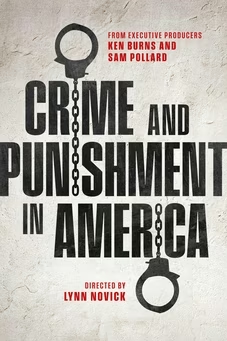








Support for PBS provided by: