
Forest Discovery
Season 3 Episode 313 | 26m 46sVideo has Closed Captions
The captivating woods of the Pacific Northwest are the subject of this landscape painting.
The captivating woods of the Pacific Northwest are the subject of this Bob Ross Wet-On-Wet Technique® landscape painting created by your host Nicholas Hankins using only a palette knife!
Problems playing video? | Closed Captioning Feedback
Problems playing video? | Closed Captioning Feedback
The Joy of Painting with Nicholas Hankins: Bob Ross' Unfinished Season is presented by your local public television station.
Distributed nationally by American Public Television
Forest Discovery
Season 3 Episode 313 | 26m 46sVideo has Closed Captions
The captivating woods of the Pacific Northwest are the subject of this Bob Ross Wet-On-Wet Technique® landscape painting created by your host Nicholas Hankins using only a palette knife!
Problems playing video? | Closed Captioning Feedback
Where to Watch The Joy of Painting with Nicholas Hankins: Bob Ross' Unfinished Season
The Joy of Painting with Nicholas Hankins: Bob Ross' Unfinished Season is available to stream on pbs.org and the PBS app.
Providing Support for PBS.org
Learn Moreabout PBS online sponsorship[music] Hi, I'm Nicholas Hankins.
Welcome back to the painting studio.
I hope you're ready to go on an Oregon woods hike with me.
So come up to the canvas and we'll get started.
I have a 12 by 24 pre-stretched, double-primed canvas on the easel.
And it's been covered with a nice thin, even coat of the black gesso, which was then allowed to dry completely.
Black gesso is water based.
And once that was dry I coated it with a very thin even coat of the liquid clear.
And up here I have a little mixture, kind of up in this upper right corner of, a mixture of phthalo blue and alizarin crimson.
Down the left side and on the bottom I've mixed up some phthalo green and some Van Dyke brown, and coated a thin coating of that all over our, our canvas with the old two inch brush.
Now, from this point forward, just going to use a knife.
We'll see what happens.
So let's start off and take a little, a little titanium white, maybe some yellow ochre.
we'll make a nice warm sunshine color here.
Something, something about like that, I think.
And we'll take a little bit of our paint, a little roll of paint on our knife And let's come up here and just, we're just going to start having some fun.
If you've never, never tried a painting entirely with a knife, you should do it.
You should do it.
They're wonderfully fun.
They'll loosen up.
If you're somebody who's afraid of the knife a little bit.
Feels like that's sort of intimidating.
It's so different from a paintbrush.
A knife painting is, that's going to be your key to happiness.
You're going to have so much fun loosening up and just seeing what you can do with the knife and all I'm, literally all I'm doing is just dragging the, the paint onto the canvas and looking at these textures that are happening.
You can vary your color a little as you go if you want to add just a little more, a little more ochre in there.
That's fine.
Just building up some paint and some brightness and this is all going to be light fading through the background eventually.
Let's start adding, oh I don't know, maybe I've got a little bit of this lavender color that I used on the background.
Let's add a little bit of that lavender color to our original mixture here.
We'll just kind of mix it till we see something we like.
That might work.
Let's try that.
And we'll come up here and put some of this in as a neighboring area.
Maybe the sun's not quite so bright over here.
And like I say, just little variations throughout.
I'm adding a little more of the, a little more of the lavender color to the original white mixture.
And like I say, it's going to pick up some of that wonderful dark color that we placed on our, on our canvas earlier.
And where these two come together, I'm just going to kind of, just kind of work them together like this.
Maybe, maybe even a little a little stirring and then sweeping.
That's kind of fun.
Now, we'll have to wipe the knife frequently as I work.
If you see me going, bye bye there don't panic.
I'm coming right back.
Let's see.
Let's take a little more white.
Maybe some, some sap green.
This is starting with a new mixture.
I'll be pushing mixtures aside and starting new ones quite a bit in this painting so we'll take a little bit of that sap green and this can be maybe a little hint of some of the foliage colors and tree colors starting to work in here.
We're just seeing a little bits and bytes here and there.
I know this looks pretty wild.
Bob always said, you know, in every series we've got to have at least one painting that's, you know, a little crazy.
You have to get a little crazy on one of them and in this series, this one's it.
This is our, this is our crazy, have fun painting.
But we'll see what happens.
We'll see what happens.
Now off to the side here I'm just going to have a little, little touch of that original, that original yellow ochre and white mixture handy in case I need to kind of do a little patchwork.
It's almost like putting drywall up.
Sometimes you have to do a little patch in between them.
Kind of allow them to work together.
Something like that.
And maybe an our, maybe an our old green and white mixture, I'll add some phthalo blue.
Make it a little more of a, a little more of a turquoise flavor, a little cooler, little cooler blue.
And we'll work some of that in here too.
Just start working our way down.
Kind of pretty already, even if it's not really much of anything yet.
I think that's half the fun with these paintings.
All right.
Now.
Move some of that out of the way.
And let's take a little white or even a little bit of our yellow ochre and white mixture, and to that I'm going to add some Van Dyke brown, a little dark sienna, a little midnight black.
We'll begin to, begin to see some distant trees very far away.
Let's cut off a little roll of paint just like that, and we'll come up here and just start working in a little tree.
Maybe hanging out back here.
Way back here.
He's bathed in sunlight.
Just see a little, little hint of a tree back there.
Something over here.
[Nic makes "tchoo, tchoo, tchoo" sounds] That's his neighbor across the way there.
[Nic makes "tchoo, tchoo, tchoo, tchoo" sounds] Still got to make little noises even with our, even with our knife painting, we've got to make little noises or it wouldn't work right.
Now I can start with that base mixture and add a little more brown, make it a little darker, and make my next tree a little closer.
Maybe it, maybe stands, I don't know, right about there.
And see, this one's maybe a little bigger.
I love these paintings too, because they're, they're very loose.
They're very loose.
Sometimes when you get a little brush in your hand, you tend to get a little too tight, a little too controlled.
It's fun to just loosen up and have a good time.
See what you can come up with with a big old, big old putty looking knife.
And it'll certainly make you more comfortable with your knife, that's for sure.
I'm going to add a little of that dark color to the bottom of that tree, and work my way up just a little bit there.
And even on these little trees, sometimes you don't even have to have paint on your knife.
You can just come in and sort of catch a little bit of that paint with the tip and draw it out, and you can paint little branches on your trees.
Isn't that crazy?
Would you believe that?
You would not believe some of the stuff you can do with a knife.
It's so much fun.
It's kind of like having, having no rules.
Just my kind of painting.
All right, let's keep going here.
We're going to build some more trees living back here.
Maybe, maybe there's another one, yeah right there.
[Nic makes "tk, tk, tk, tk" sounds] There is now.
There is now.
Just continually changing that mixture a little bit.
Adding a little more of the dark color.
Here's a little more black and brown.
Let this one come up here.
Different light conditions.
Different, different distances where these trees live.
All that accounts for the, the color being darker or lighter.
And if you keep those few rules in mind as you go, they'll always serve you well.
There we go.
We'll darken up some of the lower portions of these little trees like that.
Maybe give these some, some little branches hanging out there, just here and there.
Times it's fun to come in and maybe go back to our nice bright color here, our white and yellow ochre.
Sometimes it's fun to come in right up against the tree and sort of emphasize it.
Spotlight a little bit like that.
Isn't that neat?
Give it a little, [Nic makes "pshew" sound] give a little impact right there.
Really makes them jump out, stand out.
You can do that on, really any of these in the background that you want to.
Really make him jump.
See?
Get a little besides that one.
There we go.
Just all sorts of beautiful things going on back there.
And I'm going to start to work a few of these colors together, just a little more.
Start to let them blend a little bit now that I kind of know where my, my trees live.
In fact, you can even, if you get in a tight spot here, you can even go to your small knife and use it.
It's wonderful to have multiple sizes of knives, particularly when that's all you're using in a painting.
You get some great effects that way.
Let's see.
Maybe.
Really, I was really keen on that white and sap green.
I'm going to go back and make a little more of that.
Like that for the background.
A little white, a little sap green, that nice pale yellowy green that's so pretty.
Kind of gives a good, good transition between that yellow and the rest of the, rest of the world here.
I need a little, over in there, a little impact of that around the tree here.
Yes, I like it.
And this is the kind of painting too.
It's very important to do a little bit and then occasionally take a step back and look at it.
Squint your eyes, kind of see what's happening.
Up close they might not look like much.
It might look like a hot mess up close, but if you step back from it and squint, you'll start to see what's happening.
Okay, again, I'm just going to push some of my mixtures to the side here.
No need to throw them away because we might want to use them.
And now I'm going to pick up some of my original canvas coating.
This was my, this was my phthalo green and Van Dyke brown.
I'm going to start to work a little, start to work a little foliage into the painting here.
See?
Just like this.
Just kind of touching.
This is very similar.
If you painted mountains with me or Bob, this is very similar to how I put snow on the mountains.
It is touch and kind of let the canvas take what it wants.
It will peel it right off of that knife and give you back what's left.
Just like that.
There we go.
Just see some leaves kind of hanging in from the sides there.
Doesn't that looks like fun?
This is a good painting if you've never painted before.
Believe it or not, this is a great one if you've never painted before to jump in there and... And all you've got to have is a few, few tubes of color and a knife.
Get you a little canvas and just, just go to town.
Have a good time.
Let's see.
Let's take a little, we're going to start mixing some of our various mixtures together.
I'm going to take some of that white, sap green, a little bit of my base mixture.
That was just phthalo green and Van Dyke brown.
So we get sort of a, sort of a medium green now.
And we'll kind of come back and accent some of these areas in my darker, in my darker leaf areas here.
Kind of a little accent color.
Not quite a highlight just yet, but it's going to start to make it come to life.
And then down in here we're going to allow the colors to start to, start to work together on the canvas.
We're going to let them mix on the canvas.
And that's just what you want to be doing in any wet on wet painting actually.
Let those colors work together and mix on the canvas.
That's the beauty of this method.
[Nic makes "sshhoo" sound] So you just [Nic makes "sshhoo" sound] sometimes you make a big decision, pop it in there.
There we go.
Maybe.
Yeah, a little, little in between there.
[Nic makes "ssssshoo" sound] Work that right in.
We'll even, we'll even get brave here with our, our a dark color and we'll have, yeah, maybe right in there have a little, little branch with some leaves on it.
Just kind of right in the middle of the light area.
Whew, ooh, that's scary, but it's, it's dramatic too.
Isn't that neat?
This little cluster of leaves hanging out right there in the middle of the, middle of the woods.
Up in mid air.
Up in the middle of the air.
There we go.
All right.
Put a little accent on them just ... again, let the canvas take what it wants.
It'll give you back what's left.
All right.
Again, I'm going to move some of this stuff out of the way.
No need in throwing it away.
And let's take a little Van Dyke brown, sap green, a little black, a little phthalo blue and phthalo green.
All the dark colors are game.
Even a little crimson.
I want to make a very, very dark mixture.
Very, very dark green.
VVDG [chuckles] very, very dark green.
And let's come in here and start to work on some of our closer foliage that's down here living at the base of the trees.
Again just, just touch and kind of gently at first until I see how the, the canvas is taking the paint and then you can start to adjust.
You can push a little more firmly or kind of, kind of relax your stroke.
It all depends on what kind of an effect you're trying to achieve.
And I'm looking for sort of a broken, broken top.
Maybe some of this kind of mixes in with the background a little bit, like that.
There we go.
This starts to, starts to blur a little right here where all of this comes together.
I can't quite see where one thing stops in the next starts.
That's part of the fun of the background in this painting.
It's going to teach you to work with, work with your textures in, in various ways.
And that's, that's where really the beauty comes with working with a knife.
All right.
Actually, I tell you what.
Let's put a little, let's have a little over here too just so we've got something to work into now that I think about it.
There we go.
A little, little touch, a little tap.
And just, just vary your stroke.
We've got one tool.
You have to vary something so you very pressure and you vary the direction and kind of the way you're touching or approaching the canvas.
A little bit of that good dark stuff down here, too.
There we go.
All right, let's start having some fun in here.
Let's take... I've got some of my nice light green left over, light green mixture.
I'm going to add some more white to that.
A little, again a little touch of the sap green.
And off to one side here, I'm going to add a little phthalo blue to it.
So we get kind of that medium blue green color going.
Yeah.
About like that.
That should work.
That should work.
Let's take.. actually we'll even switch knives.
I'm going to go back to the smaller one.
You can also vary size of knife.
That'll help you too.
So let's come back and think about while we've got some... Yeah.
Cooler... This is sort of down in the shadows here, so these are a little cooler accents, cooler greens in the shadows.
And these can vary as well.
You can add a little darker, a little darker color to it as you go.
Dull it down as you move into the deeper shadows.
There I added a little more Van Dyke brown to it, just to make it a little duller and darker, a little more mysterious.
Out of the way.
Added a little alizarin crimson here.
That's really going to cool it down and dull it down.
Yeah, I'm liking that.
I'm liking that pretty good.
And then down toward the base, I'm picking up the very, very dark green once more.
[chuckles] VVDG.
We need to, we need to get that one patented.
Put it in a tube.
[chuckles] Be good if you're a knife painter.
Maybe down here in the bottom... Let me, let me wipe that big knife off again.
Maybe down here in the bottom, I'll take a little Van Dyke brown.
I'm going to go ahead and decide that I've got a little, little land down here.
So I'm going to go ahead and kind of just rough in a little dark color down here.
Doesn't this look like fun?
[chuckles] It is.
It is fun.
It's like playing in the mud.
It's like being a kid again.
Some would say I never stopped acting like a kid.
Mostly my wife, I'd say.
Okay.
Let's take.
Go back to our, kind of our, our medium coolish green here.
Our medium mixture that's the blue and the blue and the sap green.
Start adding a little more white to it, making it just a, just a touch lighter.
So I just kind of hit all over.
Let some of those neat things happen.
And I'm about to need, about to the point that I need a very light mixture now so we'll clean some of this space off here.
And let's take, oh let's take a little white, a little touch of sap green and I'm going to add some cadmium yellow to it so we have a more vibrant... even a little Indian yellow.
There we go.
Have a nice, vibrant bright, bright, bright green.
And let's come back up in here and we'll pick out some nice, nice patches of very light leaves or highlights on the darker leaves.
However you want to think about it.
Maybe a little below that we'll have a little, little patch of that right in there.
Maybe that one reaches out over that trunk just a little bit.
I don't want to get too crazy with highlight.
It's mainly going to be right there on the edges where the sun's kind of bursting through there.
This was a, this is actually a photograph, from a photograph that I took on a hike up in Silver Falls, Oregon.
It's a beautiful place.
If you ever get to visit there, you should.
Lovely, lovely place.
A few little touches of highlight on that, that bunch of leaves there.
So we drop down lower and lower.
See, we'll vary that again.
I might pick up a little more of the cad yellow, maybe a little yellow ochre.
Just so it's, just so it's a slightly different color.
Let's grab our small knife again.
And down in here I'm going to [Nic makes "whoo, whoo, whoo" sounds] Just touch some of those nice bright highlights that are kissing the tops of those, those bushes and stuff.
Nic makes "whew, whew, whew" sounds] I like that, I like that.
Like I say, vary the mixture.
There's a little more Indian yellow in a, in a dose and it looks a little more golden.
It's kind of pretty.
Maybe we'll go with a lot more ochre in this one.
Get it real sort of goldeny color.
Yeah.
Like that.
Just sort of touch and swipe and play around until you get something you like.
It's the best advice I can give you.
[chuckles] It's true for most things in life.
Just play around until you get something you like.
There we go.
Kind of a second level to these little bushes and ground foliage and stuff down here.
I'm going to give him a little touch like that.
Maybe, let those work together just a little bit.
Like I say, I do a little bit.
Step back from it, make sure it's coming together.
It's hard to tell up close on these, on these old knife paintings.
Like I say, they can, they can look a little weird at first, but see them through, stick with them.
I think you'll like what you do.
There we go.
Now, let's put a little light on the, on the forest floor down here.
We'll take a little dark sienna and white.
A little touch Van Dyke brown in there with.
Just leave that sort of a marbled appearance, and we'll come up here and just where you ... like I say, where ever you think the light is going to burst through those, all that foliage covering and heavy, heavy trees and canopy.
[Nic makes "shoo, shoom" sounds] Always with the noises.
You've got to do it.
[chuckles] You've got to do it.
And even down in here I'm varying the amount of browns and sienna, whatever.
And oh, we can have a little, let me take a little, a little bit of my lavender color and some white.
Make kind of a cool shadowy, cool shadowy color here.
And we'll let, we'll let there be a little shadow across the path there.
Yeah.
That's pretty.
Of course, if we do that, we've got to have something that casts that shadow so how about let's mix up all of the browns, both browns and some midnight black, and we'll get a not so, not so little a roll of paint on our knife there.
There you go.
That's... you ready for bravery test here.
Watch this.
Let's come up here and say right [Nic makes "ssssssooo" sound] woe yeah.
Right there.
We weren't kidding this time.
[Nic makes "shooom" sound] Comes right down like that.
Big old tree up here in the foreground.
[Nic makes "shooo" sound] And that's what's casting that little shadow across the, across the path there.
Of course it is.
Of course it is.
Might have to go over him a time or two to get him as dark or as you want.
Sometimes they cooperate.
Sometimes you have to get back in and do it again.
That's the beauty of painting with a knife.
You just kind of, just kind of go with the flow, and it really teaches you how to, how to feel that paint beneath the blade and what's happening with it.
All right.
So I've got a little, a little highlight color mixed up there already.
About to run out of room on my palette here.
[chuckles] Mixing up a little, maybe a little touch bright red in there too.
Sienna, white, a little bright red.
Kind of jumping back and forth a little bit.
There we go.
And we'll take this and come down the lit side of the tree and just [Nic makes "shhssoo-oo-oo-oo" sound] Drop a little highlight on there, something like that.
[Nic makes "ssshsssooo-ooowhet" sound] Imagine doing that without the noise.
It would never work.
[chuckles] I don't know, it might, but you wouldn't have as much fun.
Let's have a few old branches kind of hanging in off the side here.
Hanging across over everything.
There we go.
Maybe got one coming from way high up and swings down.
You have a lot of those hangy down branches out in the Oregon forest like that.
A few little, a few little things up here maybe.
Go back and get some of my very, very dark green and we'll start to, start to see some foliage hanging in from that side too.
Leaves, little bits of leaves cutting through the light.
That's a nice dramatic high contrast area there.
[Nic makes "shoo" sound] See it starting to happen.
You kind of have to hang out till the end with these to kind of see them through.
Here's some, here's some old hanging stuff off of that tree.
Old hanging foliage, hangy offy foliage.
Mix a little of my lavender and sap green.
That makes a nice, nice dark color.
Maybe, maybe we'll mix that up with a little bit of that bluish tone.
A little green.
Get that sort of cool blue.
Put a little accent on this.
I don't want that to be too bright.
That's sort of, it's sort of shaded just a little bit there.
There we go.
Now back to our, back to our good old d-, I'm going as dark as I can now.
Sap green and midnight black.
Just going to kind of add a few little bushes and things here in the front.
A little at the foot of the tree so he feels like he's planted in there.
There we go.
And these need a little highlight too.
We can't forget to show them some love.
[chuckles] Let them work down.
You know, as we close this out I want to thank everybody here at WDSC-TV that's worked so hard to make this possible.
Everybody up at Blue Ridge in Roanoke, thank you so much.
And thank you for watching.
We'll see you for the next series.
It'll be under production soon.
Take care.
Happy painting.
God bless.
[Music] [Announcer] To order Nic's 68 page all color book with 13 painting projects or the 3 disk set of DVDs for this series, call 1-800-BOB-ROSS or visit BobRoss.com [Music] [Music]
 New Episode
- Arts and Music

Innovative musicians from every genre perform live in the longest-running music series.
 New Episode
- Arts and Music

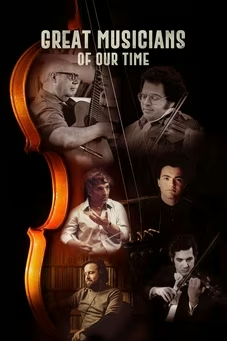
Intimate portraits of six of the most influential and celebrated classical music artists.


 New Episode




 New Episode
 New Episode
Support for PBS provided by:
The Joy of Painting with Nicholas Hankins: Bob Ross' Unfinished Season is presented by your local public television station.
Distributed nationally by American Public Television